
Are social designers being set up to fail in public organisations?
Many public organisations say they want innovation, human-centred services, and better collaboration with citizens. Yet when a social designer walks into a hiring interview or a policy programme, the value of design often becomes strangely difficult to name, place, or assess.
That tension is exactly what The Social Designer’s Paradox makes visible. BIS chose to publish this book because it explains why a pattern we keep seeing across the public sector: designers are invited in to help with complex societal issues, but the system they enter is optimised for stability, accountability, and execution. Without an understanding of each other’s legacies and expectations, both sides get frustrated, and the work gets reduced to workshops, visuals, or “a bit of Design Thinking”.
In the book, Willemijn Brouwer brings together theory, field research, and lived experience from within and around the Dutch national government. She is trained in Industrial Design Engineering and works as a lecturer in creativity and designing for societal missions, as well as a facilitator and trainer for creative processes in the public sector. That mix matters, because the book speaks to both practitioners and the public managers who work with them, without pretending the reality is neat.
Five Practical takeaways from The Social Designer’s Paradox
1) If you cannot explain your value in the organisation’s language, you will be misunderstood.
The book opens with a recognisable mini case: a designer describes strengths like “reframing” and “orchestrating”, while the recruiter hears vagueness, risk, or a mismatch with formal responsibilities. The gap is not only about jargon. It is about different professional traditions of what counts as useful work.
Put it into practice: zoom out and practice explaining why you do what you do and where that comes from.
2) Public organisations are built for stability first.
A core message is that the government is not a startup that simply needs more creativity. It operates within constitutional traditions, separation of powers, and accountability mechanisms.Practice acceptance that bureaucracy may be annoying, it is also one of the cornerstones of democracy, highly important, practice patience. That creates predictable friction with design approaches that explore, iterate, and keep options open longer.
Put it into practice: design your process around formal moments of decision-making. Clarify what must be fixed early (scope, mandate, constraints) and where exploration is allowed (options, prototypes, narratives, stakeholder insights).
3) Own Your Design Practitionership
The book shows how design in government can be reduced to tools: sprints, empathy interviews, co-creation sessions, and sticky notes. Those can help, but they often become a substitute for designers’ practitionership. deeper organisational integration of design capabilities.
Put it into practice: Be careful with terms like Design Thinking, though they provide an open door that comes with stigma; moreover, it downgrades your entire practice into a three-day course. Own your practitionership.
4) Designing for Both Sides: Users, Enablers, and System Constraints
Designers tend to work close to lived experience: citizens, frontline professionals, and the messy reality of daily life. Public systems tend to prioritise standardisation, metrics, budgets, and comparability. The paradox is that societal progress needs both, but the two worlds reward different behaviours and different types of evidence.
Put it into practice: Not just the stakes of the users but also of enablers, and systems that catalyse or obstruct the change.
5) Designers need clearer positions, not just better methods.
One of the most useful contributions of the book is that it treats social design as a form of “practitionership” rather than a toolbox. It invites readers to think about where designers can sit in or around the government, so their work is not isolated in labs or temporary projects.
Put it into practice: be explicit about your intended position. Are you supporting execution, shaping policy, or enabling organisational learning and integration? Then align your deliverables, stakeholders, and success measures to that position.
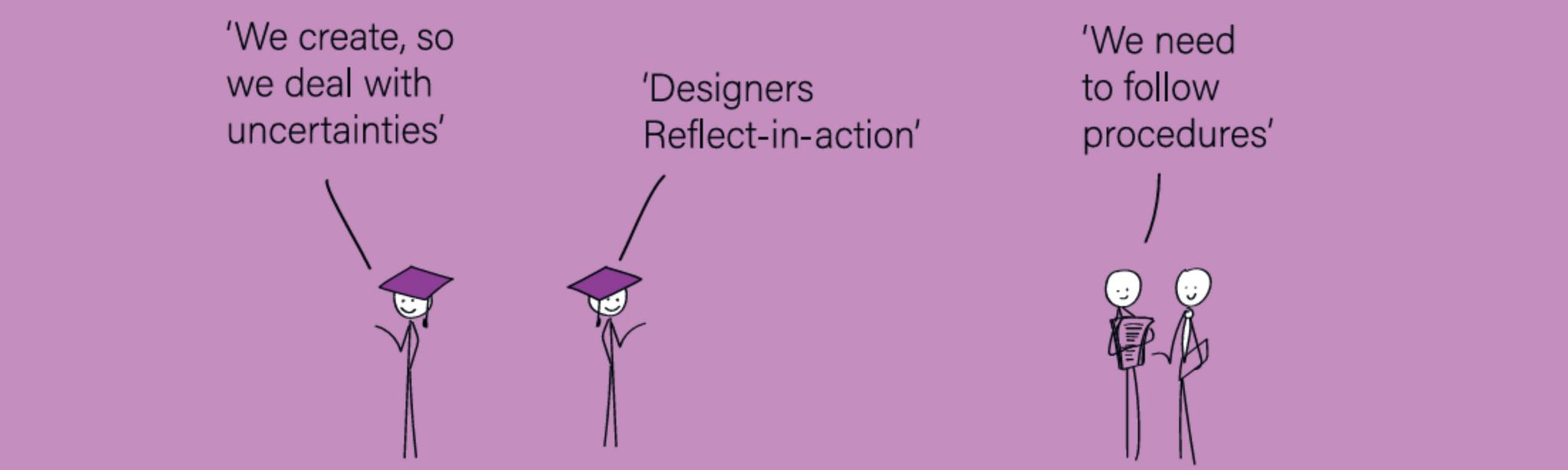
The real paradox is that designers, while masters at getting stakeholders together and implicit assumptions above the surface, forget that they come with implicit assumptions as well. Norms and values hidden in the legacy that formed their profession, this book is also to make those explicit to help designers understand why they are frustrated or why they have a different view. As designers know, and in line with a quote attributed to Einstein, ‘problem finding’ is often 95% of the solution.
For innovation leaders, designers, and consultants working with the public sector, The Social Designer’s Paradox offers something rare: a grounded explanation of why “good design work” can still fail to land, and what to do differently so it can.
If you work in government, the book helps you collaborate with designers in a way that produces decisions and implementation, not just inspiration. If you are a designer, it helps you build legitimacy and traction without diluting your craft.