

Is qualitative research really “soft” or are we just bad at making it land?
In many organisations, qualitative research is treated like a nice-to-have. Useful for colourful quotes, and interesting to maybe a couple of stakeholders, but not something that should shape strategy.
The story is all too common: researchers do the work, generate real insight, and then watch decisions get made elsewhere. Not because the research was wrong, but because it was not positioned, communicated, or operationalised in a way that decision makers could act on.
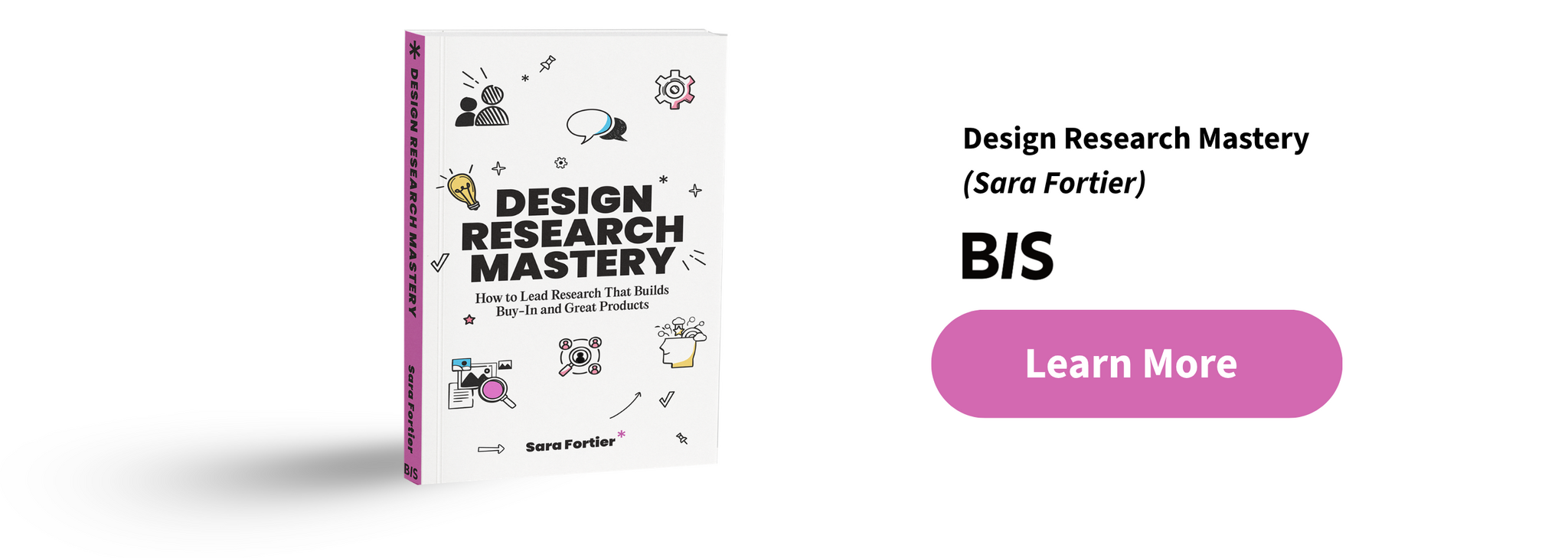
That gap is exactly why BIS chose to publish Design Research Mastery: How to Lead Research That Builds Buy-In and Great Products. The book is written by Sara Fortier, a UX and service design leader with 14 plus years of experience across sectors, and the CEO and Founder of Outwitly Inc. She has led design and research work for Fortune 100 and 500 organisations, taught at university level, and knows what it takes to make research credible inside real stakeholder dynamics.
What we value most is that this is not a book that only explains research methods. It is a book about leading research, so it influences outcomes. It gives readers a step-by-step approach, practical templates and checklists, and guidance across four core methods of discovery research: in-depth interviews, observations, diary studies, and workshops.
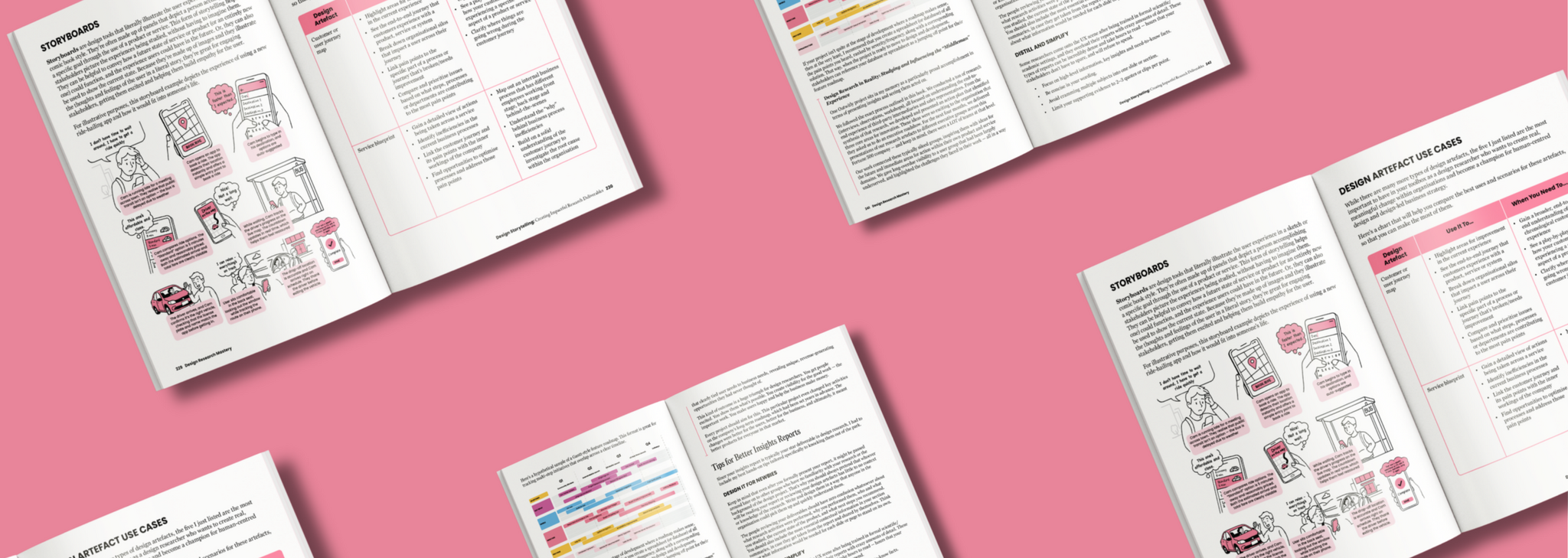
5 practical takeaways from Design Research Mastery
1) Treat buy-in as part of the research work, not something you ask for at the end.
Fortier frames influence and trust as inputs to research success, not side effects. If stakeholders are not involved early, they are less likely to believe the findings or act on them, even when the work is strong. In practice, this means mapping the stakeholders who will be interested, involved, or impacted by the research, understanding what they care about, and bringing them into key moments such as goal setting, choosing method, and sense making.
2) Start with clear research goals that connect to business decisions.
When research is framed as exploration without a clear tie to business goals, it becomes easier to ignore. The book pushes readers to craft goals, themes, and questions that connect directly to what the organisation is trying to decide or change.
A useful habit is to ask upfront: what decision will this research inform, and what will we do differently depending on what we learn?
3) Make choosing methods a strategic decision, not a default.
The book covers four widely used methods, but the bigger lesson is how to choose intentionally. Interviews, observations, diary studies, and workshops each produce different kinds of evidence, and each has different demands on time, access, and stakeholder involvement.
If you need to understand workarounds and real behaviour, observation can outperform interviews. If you need longitudinal insight, diary studies can reveal patterns that a single session will miss.Combining methods strategically can even help to make insights richer, reduce accidental data bias, and create more compelling recommendations.
4) Treat plans and logistics as parts of your core research craft.
Fortier demonstrates how operational excellence is crucial to leading research. Recruiting, scheduling, participant preparation, and smooth session flow are not just admin tasks. They are what makes stakeholders confident that the work is trustworthy.
One simple improvement is to standardise your project initiation and execution steps using checklists, so every project has the same baseline quality even under pressure.
5) Communication is not reporting; it is enabling action.
Many teams stop at findings. This book pushes further: how do you present insights so they change minds, align teams, and survive the politics of prioritisation?
Practically, that means tailoring reporting formats to suit the decision makers who’ll read them, telling a clear and compelling story with the insights, and making the next steps obvious. A small but powerful shift is to always pair an insight with a business decision it supports, and a recommendation that is feasible within current constraints - and occasionally, an engaging quote from the data.
Who this book is for
Design Research Mastery is especially relevant if you lead or contribute to research in organisations where stakeholder alignment is complex, where research is questioned, or where teams struggle to translate insight into product and service decisions.
It is also useful for designers, innovation leaders, and consultants who want research to be a strategic catalyst rather than a deliverable. Learning and development or certificate programs. can use it as a companion for training that focuses on hands-on industry skills.

Closing thought
The core message we took from this book is clear and timely: research becomes valuable when it earns trust and drives decisions. Fortier offers a practical path to do both, without turning research into performance or stripping away nuance.
If your organisation says it wants to be customer-centred but does not yet know how to truly use qualitative insight, this book gives you a concrete way forward.