

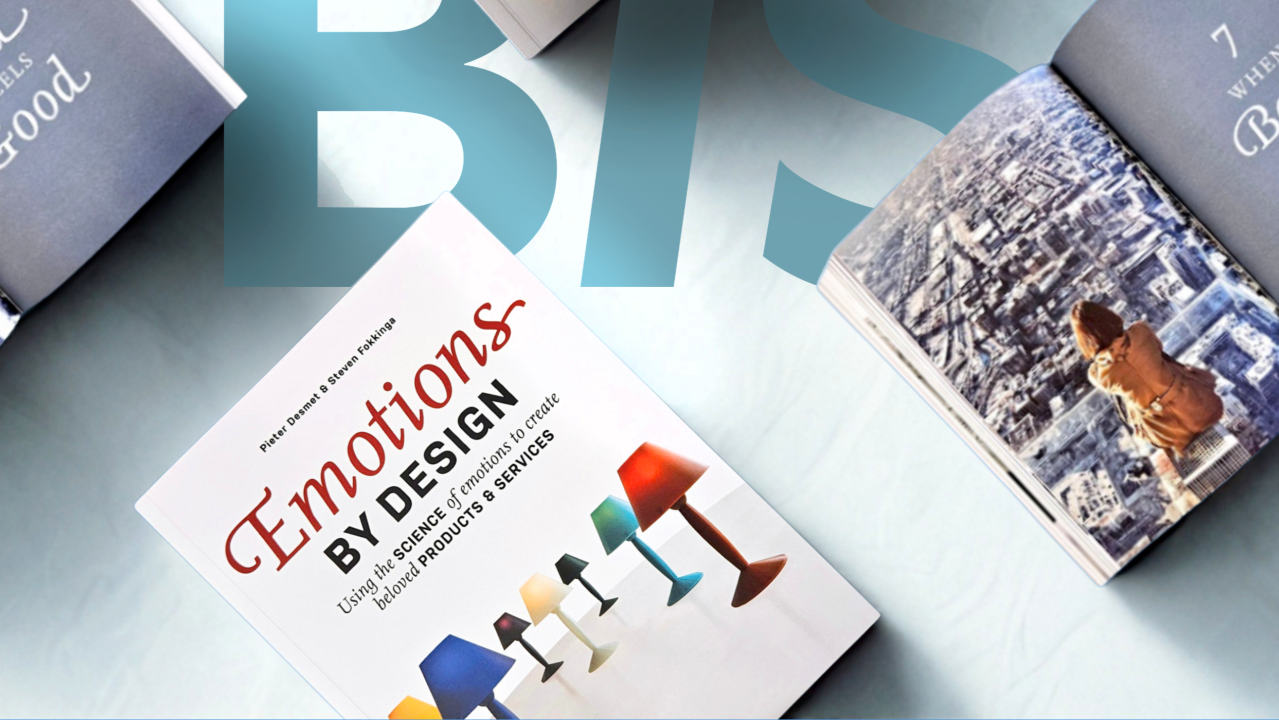
Why some products are beloved, and others are just used
A participant once walked into one of Pieter Desmet and Steven Fokkinga’s workshops, placed a black pencil on the table, and declared: “I feel deep admiration for this pencil.” He then placed a second pencil next to it - identical, except with a round barrel instead of hexagonal. That one promptly rolled off the table. The hexagonal pencil never does. Since he used pencils constantly, that tiny difference mattered enormously.
This story opens Emotions by Design, and it captures the book’s central argument with striking economy: emotions aren’t random or irrational. They are the human system’s way of telling you whether something serves your needs - or doesn’t. And because that system works the same way in every person, emotions are far more predictable than most designers assume.
The book is the result of more than two decades of research and teaching at Delft University of Technology, combined with practical experience at Emotion Studio, the consultancy Desmet and Fokkinga co-founded. It speaks equally to those new to emotional design and to those who have been working with it for years - offering both a coherent scientific foundation and a concrete toolkit.
“Everything we design evokes emotion, whether or not we intend it. Those emotions influence adoption, continued use, and wellbeing.” — Pieter Desmet
Emotion is not the icing on the cake
The most common misconception in design practice is that emotion is something you layer on top, a finish applied once the serious work of functionality and usability is done. Desmet and Fokkinga dismantle this idea from the very first pages.
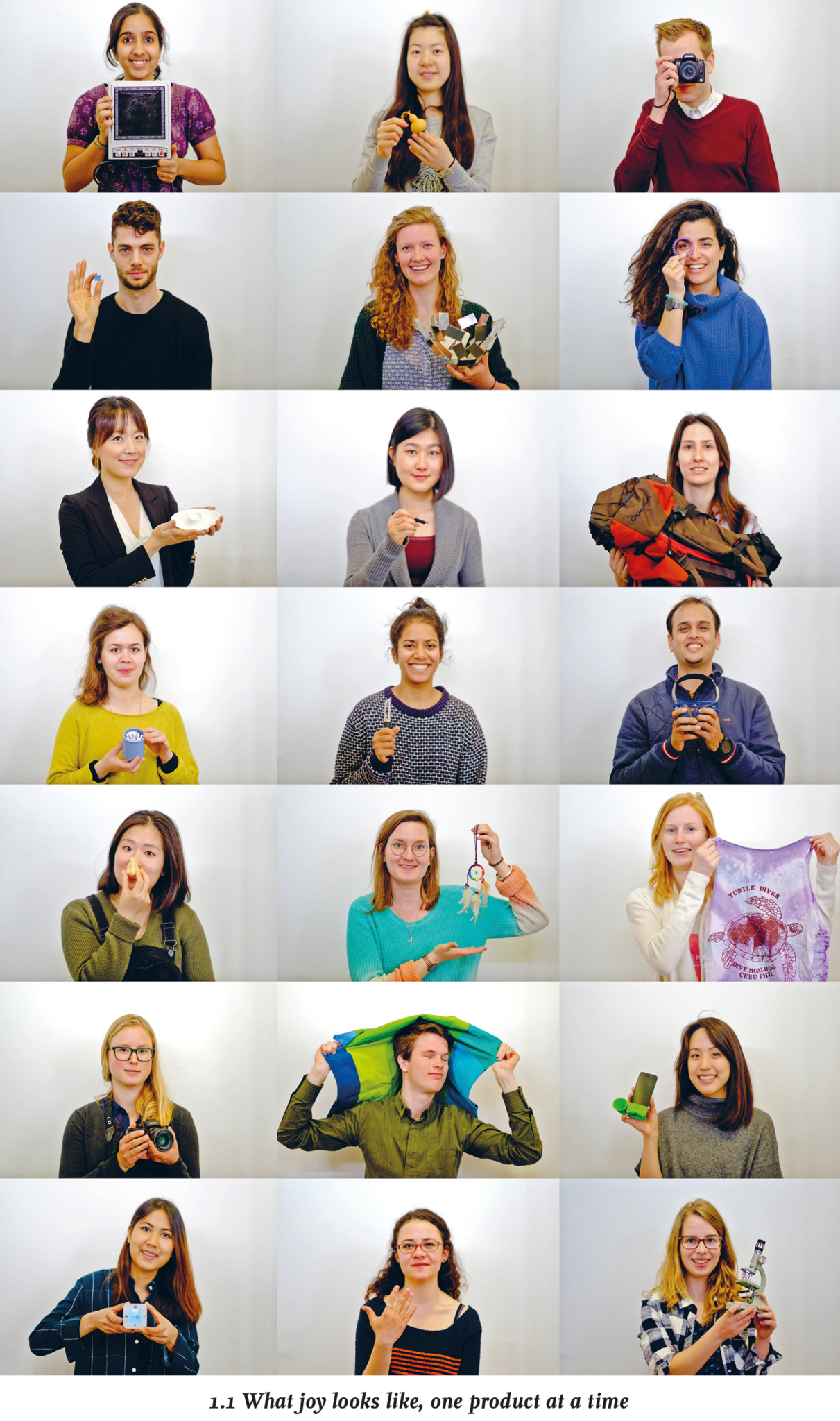
Every product evokes an emotional response. A 30-cent hexagonal pencil can arouse genuine admiration. A high-tech smartwatch can provoke deep frustration. The question isn’t whether your product produces an emotional experience - it always does. The question is whether that experience is one you’ve understood and designed for, or one that happens by accident.
The book frames emotional design not as a genre or aesthetic, but as an approach: study, understand, and anticipate people’s emotional responses so you can design products that genuinely serve them. Crucially, this doesn’t mean removing function or usability from the equation. It means recognising that people never experience function and usability in isolation, they experience the whole thing at once, through an emotional system that is constantly asking: does this serve my needs?
Emotions follow rules - and that’s the good news
The intellectual core of the book is something emotion scientists call appraisal theory: emotions don’t arise from objects or events themselves, but from how we interpret those objects and events in relation to our needs and values. Two people can respond differently to the same product, but always for the same underlying reason: the product either serves a need they have, or it doesn’t.
This is what makes emotional responses predictable, and therefore designable. Fear is always about a perceived threat. Pride is always about an achievement that matters to you. Relief always follows the resolution of something you were worried about. The specific trigger varies from person to person, but the pattern is universal.
This leads to what the authors call the First Law of Emotional Design: every positive emotion signals that a need is fulfilled; every negative emotion signals that a need is compromised. The practical implication is significant: if you can identify which need is at stake, you can understand the emotion, and design toward or away from it.
To support this, the authors have mapped 13 fundamental human needs that appear to be universal across cultures: Security, Stimulation, Fitness, Competence, Autonomy, Relatedness, Community, Recognition, Morality, Impact, Ease, Beauty, and Purpose. These needs function like jars that must be kept filled - overserving one cannot compensate for another running empty.
The emotions you don’t notice are shaping the experience
Much of the book’s practical contribution lies in its treatment of micro-emotions: the constant, low-level emotional responses that arise during product use and mostly go unnoticed. These are not vague “vibes.” They are specific, nameable states - a flicker of relief when a task completes without error; a small surge of pride when something works the way you expected; a barely-perceptible irritation when a form resets your input.
Drawing on the neuroscientist Antonio Damasio’s work on somatic markers, the authors explain that these micro-emotions are not noise around the real experience - they are essential to it. They accumulate in the body as a kind of guidance system, steering behaviour and shaping the impression a product leaves behind, long before conscious evaluation kicks in.
The design implication is that it’s not enough to get the “big moments” right; the launch, the onboarding, the headline feature. The texture of the everyday experience matters at least as much. A product that reliably produces the right micro-emotions at the right moments builds something difficult to replicate: genuine attachment.
“Emotions signal importance. When someone feels something strongly in a specific moment, it tells you what truly matters to them - often more than when you just ask.” — Steven Fokkinga
What people say they want isn’t always what they need
One of the book’s most practically useful chapters concerns the gap between stated preferences and underlying needs. Users rarely tell you about their needs directly. They tell you what they want; a feature, a fix, a change. The real need, the one driving the emotion, is usually one or two levels deeper.
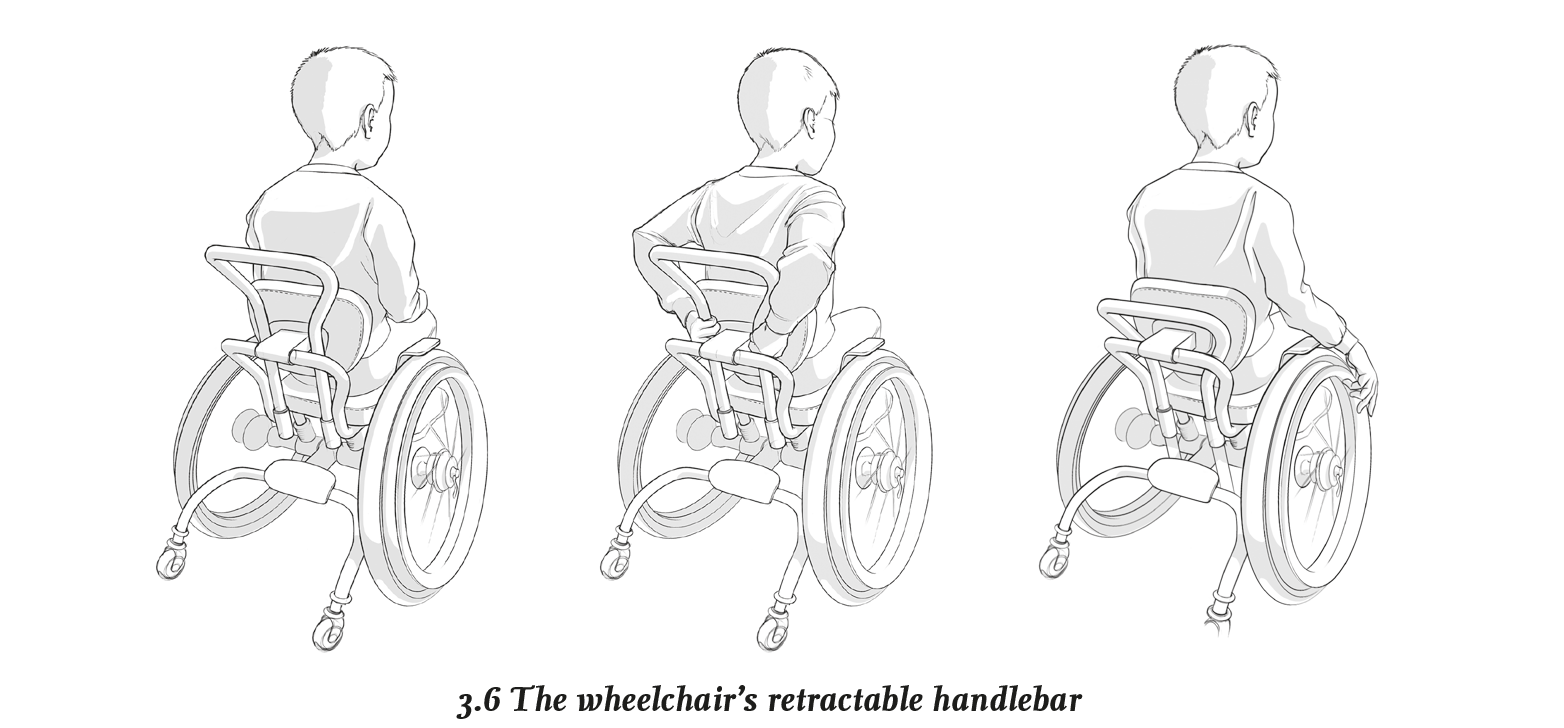
The authors illustrate this with a memorable case: a children’s wheelchair redesign. Children hated the push handles; parents loved them. Traditional feedback analysis would have produced a compromise that satisfied no one. Using need laddering; a technique for tracing surface preferences back to their underlying drivers - the designer discovered that the handles symbolised dependency for the children, directly threatening their Autonomy need. The solution was a discreet bar that could slide behind the seat when not in use: the same function, but without the emotional cost. Technologically simple; emotionally profound.
The book distinguishes usefully between fundamental needs (universal, like Autonomy or Competence) and specific needs (context-dependent - what a daily commuter needs from a bag is different from what a surgeon needs). This hierarchy gives designers a structured way to move from the surface of a problem to its emotional root.
Conflict is not a problem to eliminate, it’s material to design with
The book takes an unusually honest position on one of the persistent challenges in design: people have conflicting needs, and you cannot always serve them all. A mobility aid needs to be both visible (for safety) and invisible (for dignity). A news app needs to be engaging and also not anxiety-inducing. Speed and care often pull in opposite directions.
Rather than treating these tensions as problems to be resolved through compromise, Desmet and Fokkinga argue that the most interesting design work often happens inside them. Acknowledging a genuine tension honestly - and finding a solution that respects both sides rather than flattening them - is frequently where innovation lives.
Not all positive emotions are the same, and that matters
One of the more distinctive contributions of the book is its insistence that designing for “positive experience” is too vague to be useful. Contentment, excitement, pride, fascination, awe, and playful amusement are all positive emotions, but they arise from different needs, produce different behaviour, and call for entirely different design responses.
A product designed to evoke pride (something that confirms a valued achievement) will look very different from one designed to evoke fascination (something that invites exploration and discovery). Generic happiness is not a design brief. The book provides both an Emotion Typology - covering 60 distinct emotional states - and practical methods for specifying which emotions are appropriate to a given context and why.
Sometimes the right emotion is a difficult one
Perhaps the most counterintuitive chapter in the book explores the deliberate use of negative emotions in design. Horror films create fear. Difficult puzzles create frustration. Sentimental narratives make us cry. Spicy food causes pain. Yet people seek all of these experiences, because in the right context, a difficult emotion is exactly what makes something worthwhile.
The chapter opens up a set of possibilities that most design processes don’t consider: that challenge, tension, melancholy, or mild discomfort can be legitimate, even desirable, design outcomes. The goal is not frictionless pleasantness. It is experiences that are emotionally right for the moment and the person.
Why We Believe Emotions by Design is a Must-Read
What distinguishes Emotions by Design from the large category of books about creating better experiences is its scientific grounding. The authors are not offering intuitions dressed as frameworks. They are translating decades of rigorous emotion research - from psychology, neuroscience, and anthropology - into a coherent and practical design approach.
At the same time, the book is genuinely readable. It is built around vivid examples, honest case studies, and a cumulative argument that rewards reading from start to finish. The dedicated Tools & Techniques section makes it equally useful as a reference once the argument has been absorbed.
The ultimate claim of the book is optimistic: emotions are not a mysterious byproduct of good design. They are a predictable outcome of how well a product serves the needs of the people who use it. Understand the needs, and you can shape the emotions. Shape the emotions, and you can create something people don’t just use, but genuinely love.