



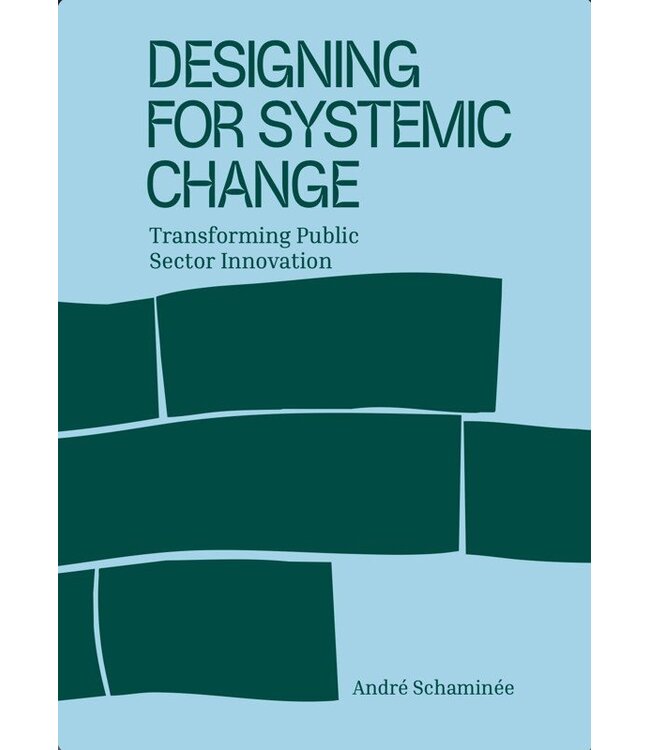

Designing for Systemic Change
Real change is hard, but it is possible. Designing for Systemic Change shows how a design-led approach can help you navigate complexity and create lasting impact.
Free shipping within the Netherlands
On orders of 20 euros and moreFast global delivery
Next day in NL, 1-5 business days in Europe and US, other countries ASAP
Product description
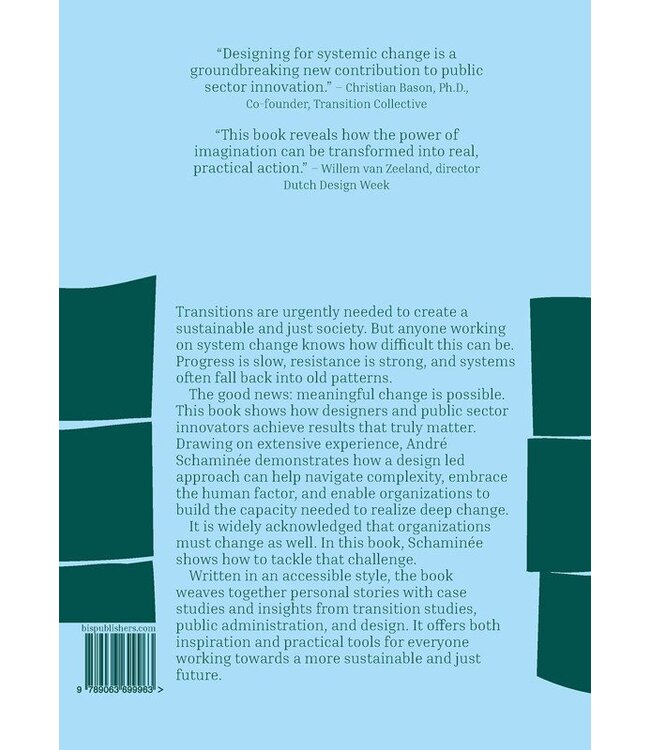
Transitions are urgently needed to create a sustainable and just society. But anyone working on system change knows how difficult change can be. Progress is slow, resistance is strong, and systems often fall back into old patterns. The good news: meaningful change is possible. This book shows how designers and public‑sector innovators achieve results that truly matter. Drawing on extensive experience, André Schaminée demonstrates how a design‑led approach can help navigate complexity, embrace the human factor, and enable organizations to build the capacity needed to realize deep change. It is widely acknowledged that organizations must change as well—in this book, Schaminée shows how to tackle that challenge. Written in an accessible style, the book weaves together personal stories with case studies and insights from transition studies, public administration, and design. It offers both inspiration and practical tools for everyone working toward a more sustainable and just future.
Author
André Schaminée is Partner and Head of Social Design at Dutch consultancy firm TwynstraGudde. Trained as an urban planner, he earned his stripes as an entrepreneur in the cultural sector and as a project manager for large spatial planning projects. He co-founded a design network within the firm that brings together organisational science and design, creating an innovative approach to tackling complex public challenges.
Quote
Drawing on examples from the Dutch agricultural sector that the author has personally experienced, the book convincingly illustrates the complexity of change processes and the importance of understanding their cultural and historical context. It demonstrates how these processes can be approached and how collaboration across different levels can contribute to a more just and sustainable society.
Although key concepts such as change (never an end in itself), complexity (highly interconnected challenges), system (the broader scale), and culture (shared values and practices) are not explicitly defined or critically examined, the book effectively conveys the needs and dynamics of innovation processes. While the role and methods of designers as educated in, for example, Delft are not discussed directly, the book offers ample food for thought, supported by clear and accessible models.
Dr. ir. Annemiek van Boeijen
Delft University of Technology
Reviews
Preview
Specifications
Designing for Systemic Change
0 reviewsReview Designing for Systemic Change
Real change is hard, but it is possible. Designing for Systemic Change shows how a design-led approa..