

Beyond the Book: Exploring Visual Structures Through Play, Experimentation, and Making
We learn to design by learning to see, create, and embrace systems of visual communication.
Shaping Visual Structures: The Art of Composition, Movement, and Space in Graphic Design is a book that explores the foundations of visual communication through observation, experimentation, and making. Beginning with simple elements such as dots, lines, shapes, space, rhythm, and movement, the book gradually introduces more complex visual relationships while encouraging readers to develop their own ways of seeing and creating.
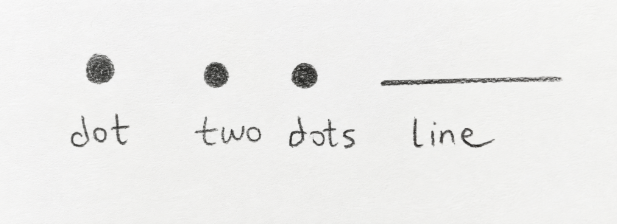
Figure 1 — Dot to line
A single dot establishes a point in space. Two dots placed in relation to one another begin to create a visual connection, suggesting direction and the formation of a line.
It all starts with a small dot or mark placed on paper or a screen. For example, placing two dots together begins to suggest a line. As we continue creating an abstract composition, forms and relationships begin to emerge - often before we fully understand why.
There is a moment—often quiet and easily overlooked—when we realize that we can create meaning without first mastering a system. We begin through attention. Through observation. Through play. Through giving ourselves permission to try something we have never done before.
This is where Shaping Visual Structures: The Art of Composition, Movement, and Space in Graphic Design begins.
The book is not intended to be a manual in the traditional sense. It does not ask for perfection, prior knowledge, or a fixed way of thinking. Instead, it begins with something more fundamental: a visual language built from simple elements - dots, lines, forms, rhythm, space, and movement. From these elements, relationships begin to emerge, creating opportunities for exploration, creativity, and freedom.
Between Structure and Spontaneity
The approach explored in Shaping Visual Structures moves between composition, movement, and space. These ideas coexist, continually influencing one another and the visual solutions we create.
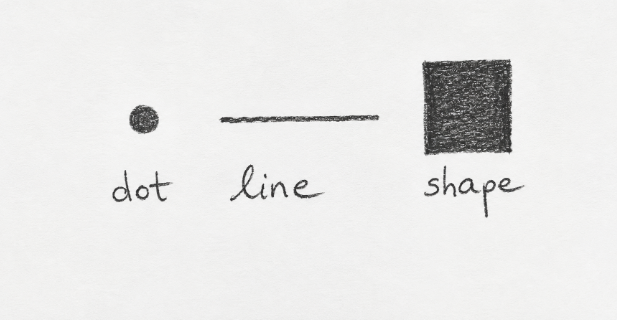
Figure 2 — Dot, line, and shape
The dot, line, and shape form a simple visual vocabulary from which increasingly complex relationships and compositions can develop.
A system can create new possibilities, and those possibilities can reveal unexpected solutions.
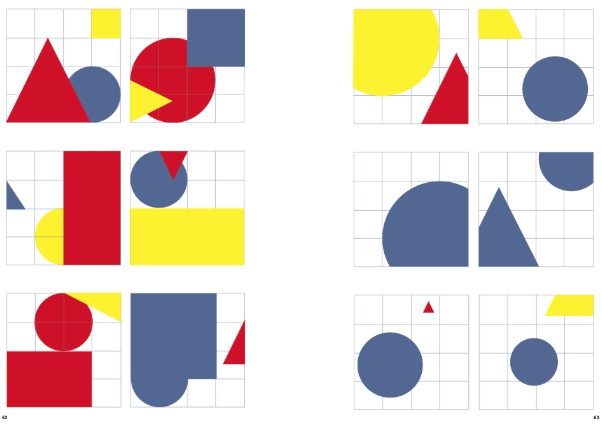
Figure 3 — Grid compositions, pages 62-63
A grid provides an underlying structure for exploring variations in scale, position, proportion and the relationships between geometric forms.
A grid, for example, can provide structure while allowing countless possibilities within it. A spontaneous composition may appear intuitive, yet through observation we can begin to recognize patterns, relationships, and systems within it.
This connection between systematic thinking and practical design is reflected in how readers experience the book. As Nicholas Desaulniers, a UMBC, University of Maryland Baltimore County student, shared:
“The Systematic chapter stuck with me. I liked how it breaks composition down into shapes on a grid. I do structured print and layout work, so it's a clean way to think about how blocks of text and image sit on a page.”
The goal is not to prescribe a single method for creating a composition. Instead, the book encourages readers to investigate visual structures from multiple perspectives, the reader can bring their own experiences to the process, and discover how their personal ways of seeing and making can develop through experimentation.
Making Visual Language Accessible and Meaningful
Some readers may come to the book already familiar with graphic design. Others may approach it with uncertainty and without experience. Either way design belongs primarily to people with curiosity and creativity and with no necessity of specialized software or technical expertise.
Visual thinking is already present in the ways we organize objects, notice patterns, respond to scale, recognize contrast, and understand relationships between shapes in our daily lives.
The challenge is learning to notice these relationships—and discovering how they can create a visual narrative or communicate a message.
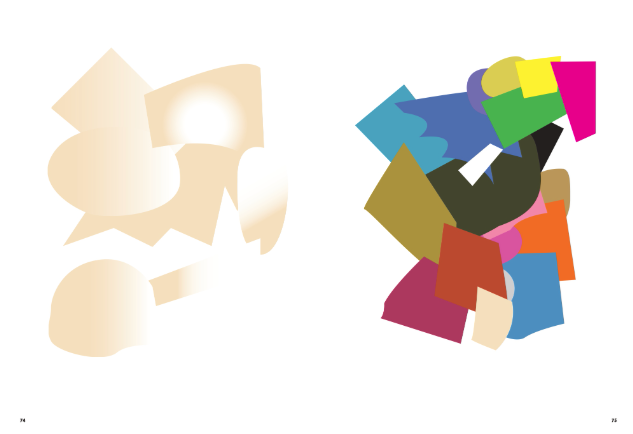
Figure 4 — Abstract forms, pages 74-75
Layered abstract forms demonstrate how shape, color, overlap, and spatial relationships can generate multiple visual possibilities and interpretations.
As Elizabeth Resnick, Professor Emerita of Graphic Design at Massachusetts College of Art and Design and 2025 AIGA Medalist, observed:
“What struck me immediately is the immediacy of your visuals. They communicate so clearly that they don't require text for readers to fully experience or understand them. The visual logic stands on its own, while the accompanying text provides language for those who want to explore, apply, or teach your underlying concepts. I really admire this balance.
I also love the dual nature of the book. Pairing the conceptual framework with generous sketching space invites readers to think, experiment, and construct ideas on their own.
I own many books on design principles, and so many rely on familiar modernist tropes—Gestalt psychology, primary colors (red, blue, and yellow), basic geometric forms (circle, triangle, square), and clean, polished technical aesthetics. Your book immediately stood out because it offers a much broader range of graphic design languages. I find this incredibly refreshing. It reminds readers that there are many ways to visualize, translate, and teach design pedagogy, rather than reinforcing a single dominant visual tradition.”
Her reflection speaks to one of the central intentions behind the project: to make the foundations of visual language approachable while leaving enough openness for individual interpretation and discovery.
Learning Through Play
Play is an important part of this process. When we experiment without knowing exactly what the outcome will be, we give ourselves permission to discover something unexpected. Cutting, folding, drawing, rearranging, repeating, and layering become ways of thinking. These shifts can transform the experience of learning by encouraging experimentation rather than correction.
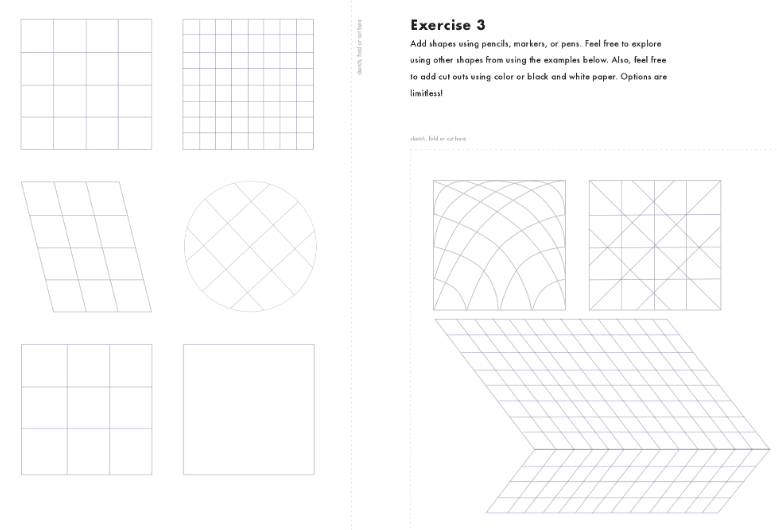
Figure 5 — Exploring Structure Through Grids, pages 70-71
Different grid systems provide frameworks for experimentation, inviting readers to add, arrange, and combine shapes while exploring structure, variation, and visual relationships.
Archana Shekara, Professor of Graphic Design and Co-Director of Ethnic Studies at Illinois State University, describes this quality in the book as an invitation to understand visual language through “play and experimentation.” She notes how the exercises encourage exploration, discovery, and participation without judgment, allowing readers to learn through making:
“Shaping Visual Structures invites readers to understand visual language through play and experimentation. Through clear diagrams and accessible explanations, Viviana Cordova demonstrates how simple forms and relationships can generate rich and complex visual structures, making foundational design concepts approachable and engaging. From geometric elements to abstract compositions, the exercises evoke a childlike curiosity and foster exploration, discovery, and participation without judgment, encouraging readers to learn through making. It is more than a design textbook; it is a generous and rewarding resource for anyone interested in visual thinking, creativity, and design.”
This idea - that making itself can become a form of understanding - is central to the book.
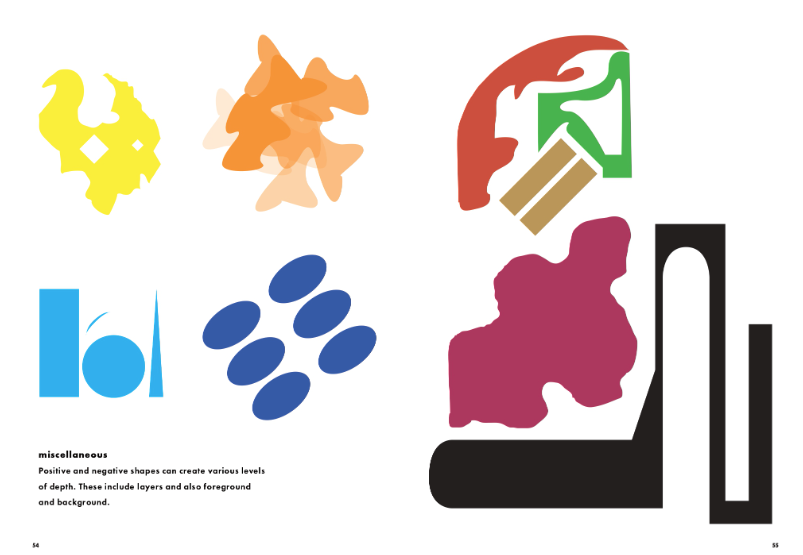
Figure 6 — Positive and Negative Shape Relationships, pages 54-55
Abstract forms explore the relationship between positive and negative space, using layering, overlap, and contrast to create depth and dynamic visual relationships.
That sense of creative freedom is also reflected in the experience of Caleb Willetts, a Towson University student:
“Shaping Visual Structures gives designers a chance to play around with design and think outside of the box. The exercises in the book take you back to the fundamentals while encouraging you to draw, collage, and fold, which allowed my creativity to run free!”
This freedom to experiment - to draw, collage, fold, rearrange, and discover - is central to the experience of learning through making.
Beyond the Book: Free Bonus Pages
To extend this experience beyond the printed book, I created a collection of free bonus pages that readers can use to select ideas from Shaping Visual Structures.
More about Viviana (LinkedIn profile)